

Through research and collaboration, Karakter International aims to improve diagnostic practices, therapeutic methods, and support for both patients and professionals. With projects such as "Back to School," "KELPIE," and "Compulsory Education Across Borders," we work to enhance well-being and educational outcomes for young people in the Euregio Rhine-Waal region.

PROJECTS
School Attendance Problems
In collaboration with our German partners from LVR, we addressed school attendance issues in child and adolescent psychiatry through the international "Back to School" project.
This initiative, involving partners in the Euregio Rhine-Waal region, aimed to investigate school absenteeism in German and Dutch psychiatric clinics. By examining the social and psychological factors contributing to absenteeism, we sought to elucidate the nature and extent of school attendance problems among young people with mental health issues. Data collection through surveys provided insights into absenteeism patterns and related mental health problems. This collaborative effort aimed to reduce the burden of mental health problems on academic achievement and promote better overall well-being and educational outcomes for young individuals. The project was supported by the Interreg V Deutschland-Nederland program.

Outcome
School attendance problems (SAPs) are common in children and teens, often linked to mental health issues. This study explored how widespread and severe these problems are in Dutch and German children with mental disorders. Researchers studied 354 patients aged 6 to 20 from psychiatric clinics in the Netherlands and Germany. Parents completed questionnaires to assess their children's behavior and school attendance.The study found that 66.9% of the children had SAPs. Factors like inpatient psychiatric treatment, behavioral issues, and having multiple mental health conditions were strongly associated with these problems. Older children and those with phobic anxiety disorders were more likely to miss a significant number of school days.The findings underscore the importance of addressing SAPs in children with mental health issues, as regular school attendance is crucial for their development and future opportunities. As such, it is important for mental health professionals to address SAPs in children and adolescents with mental health problems.
Classification Comparison
In collaboration with our German partners from LVR, we undertook the Classification Comparison project to explore differences in mental disorder classification distributions between German and Dutch child and adolescent psychiatric clinics.
This study aimed to compare the prevalence of various psychiatric classifications using data from both countries. We found notable differences in classification patterns and that these were influenced by age and sex. By analyzing these patterns, the project sought to enhance the understanding of diagnostic practices, contributing to more consistent and effective mental health care across borders. The project was supported by the Interreg V Deutschland-Nederland program.

Outcome
Classification systems like the DSM-5 and ICD-11 help compare mental disorders across countries, but few studies have looked at how these classifications differ in child and adolescent psychiatry. This study aims to explore the similarities and differences in mental disorder classifications between German and Dutch children and adolescents.
The study analyzed data from 7,089 German and 2,574 Dutch children and adolescents with mental disorders, aged 0 to 18 years. Researchers used multivariate analysis to compare the primary classifications between the two countries, dividing the patients into three age groups: early childhood, middle childhood, and adolescence.
The country was the main factor influencing how mental disorders were classified, with age and sex having moderate to low impacts. German patients were generally older, with a higher proportion of girls. Mood, anxiety, and conduct disorders were more common in Germany, while autism and ADHD were more prevalent in the Netherlands.
Our findings suggest that the primary classifications of mental disorders in Dutch and German children and adolescents largely depend on the country. This may have implications for cross-country comparative and highlights the potential influence of national mental healthcare systems on classification practices, which could impact policy decisions.
Animal Assisted Therapy
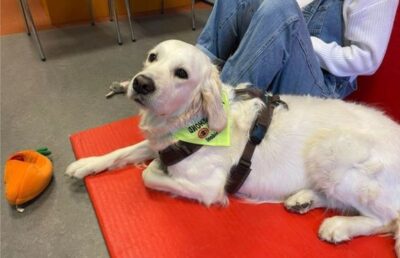
In partnership with LVR Viersen, we launched the KELPIE project to investigate the application of Animal-Assisted Therapy (AAT) in child and adolescent psychiatry.
This collaboration aimed to integrate knowledge and practices between Dutch and German centers, addressing the gaps in the current understanding and implementation of AAT. The project focused on observing and analyzing the effects of incorporating animals into therapeutic settings, specifically their impact on patient-therapist communication and treatment outcomes. By sharing expertise and developing best practices, the project sought to improve the quality and efficacy of AAT, ultimately benefiting children and adolescents with psychiatric conditions in the Euregio Rhine-Waal region. The project was supported by the Interreg V Deutschland-Nederland program.
Outcome
The KELPIE study explored whether having a therapy dog or pony in a therapeutic session affected children’s satisfaction and how much they spoke. Researchers found that while the presence of an animal didn’t make children feel more listened to or important, it did significantly increase their enjoyment of the session. Children felt happier and more positive about their experience when a therapy animal was present, suggesting that animals may help create a more comfortable and enjoyable atmosphere in therapy.
However, having a dog or pony in the session didn’t lead children to use more words in their answers. This indicates that while animals can make children feel more at ease and engaged, they don’t necessarily encourage them to talk more. Overall, the study suggests that therapy animals can positively impact children’s emotional experience without directly affecting their level of verbal engagement.
Compulsory Education across borders
We participated in the Compulsory Education Across Borders project, led by the Gemeente Nijmegen.
This initiative aimed to address challenges arising from the differences between Dutch and German educational and support systems. The focus was on Dutch families living in Germany whose children attended school in the Netherlands, especially when issues like school attendance or developmental problems occurred. By collaborating with German and Dutch partners, the project aimed to streamline compulsory education enforcement and improve support for these families, fostering better communication and coordination across borders. The project was supported by the Interreg V Deutschland-Nederland program.

Eating disorders
In collaboration with German partners we are exploring the impact of treating young people with anorexia nervosa on mental health professionals.
The ED-CARE project involves Dutch and German professionals working in different healthcare systems but facing similar challenges and difficulties. By exchanging experiences and insights, the research aims to provide a deeper understanding of these challenges and ultimately improve support systems for mental health staff. The findings will contribute to better working conditions and treatment outcomes in both countries. The project was supported by the Interreg VI Deutschland-Nederland program.

Outcome
The treatment of anorexia is an emotional challenge for patients, their environment and their therapists. The condition is complex and can have life-threatening consequences. Treatment teams regularly struggle with ethical and emotional dilemmas and a sense of powerlessness.
The three main results of our qualitative research into the impact of force-feeding on healthcare professionals:
Despite different clinical contexts, the experiences of professionals in the Netherlands and Germany are comparable
The German and Dutch treatment protocols are comparable. Both countries have a strong medical focus and family based therapy is the first intervention. But in practice, we see a great variance. A big difference between Germany and the Netherlands is how the care system is organized. In the Netherlands, care is more focussed on outpatient care aiming at the child as well as their surroundings including parents, schools etc in the treatment. In Germany, the system is organized around the clinics and patients are more often being treated in the clinics. There are less options to involve parents or the surrounding system in the treatment.
Force-feeding has a huge emotional impact on professionals (and everyone involved)
- While treating patients with severe anorexia nervosa, professionals see themselves confronted with significant ethical, medical, and emotional questions and dilemma’s.
- From strong emotions to feeling numb
- People change their job because of the impact
- Fighting outside opinions: defending a treatment they don’t want to do
- Division between professional and teams (care team vs therapeutical team), parents, patients
- Feels like there is no alternative
More awareness, knowledge and funding are needed to support clinicians – and hence patients
- Open communication with colleagues, parents, patients (build trust and confidence)
- Supervision/intervision: individual and team level (emotional processing, new perspectives, feel supported)
- Agency: The option to not do a procedure because it is too much to handle. While in most cases it was possible to decline having to perform FTF, in other cases it was seen as “part of the job”. By giving professionals agency they are not forced into performing procedures they are not comfortable with.
- More staff
- Follow up contact with patients: With regards to patient contact, follow-up contact with patients were mentioned as supportive to professionals. It helped them reflect on the treatment process and to just see how their patients are doing after treatment. While this can be a difficult and confronting experience by professionals as well as patients, it can significantly help in the emotional processing and healing of both.
- Focus groups were intervention in itself, Sharing experiences, perspectives, and clinical approaches with colleagues from another country can help gain new insights.
- Prevention/ketenzorg: Professionals want more collaboration with other institutions involved in caring and educating children. Prevention through educating GPs, paediatricians and independent psychologists in the region can help prevent children to develop unnecessarily severe conditions of their disorder. A closer connection with schools could also help with the reintegration of children with AN and providing more effective and value care.
See also the review page of the symposium Forced feeding in anorexia, the impact on professionals
More information
Do you want to know more about our research & development projects?
Please feel free to contact us at international@karakter.com