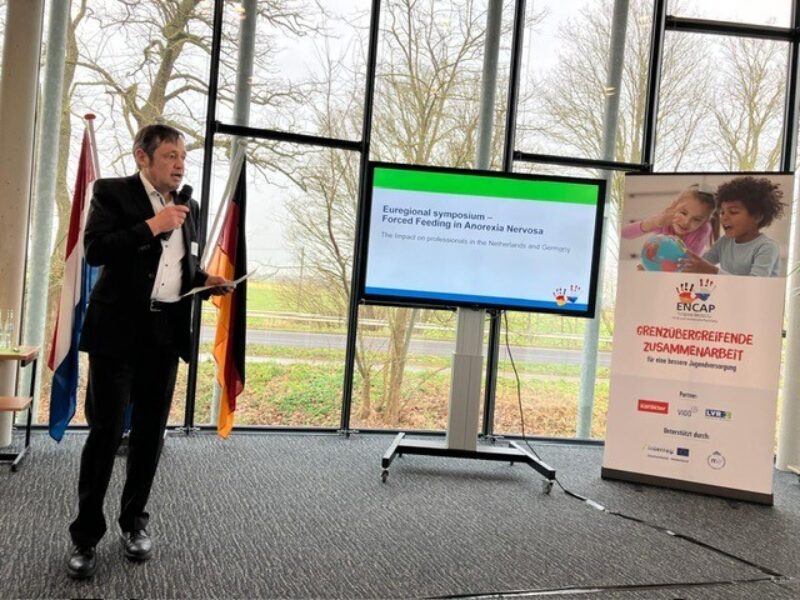
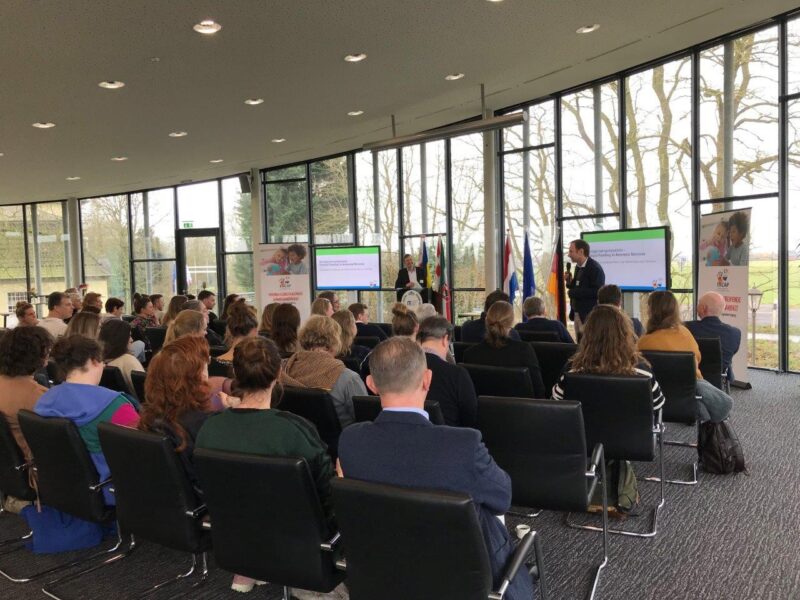
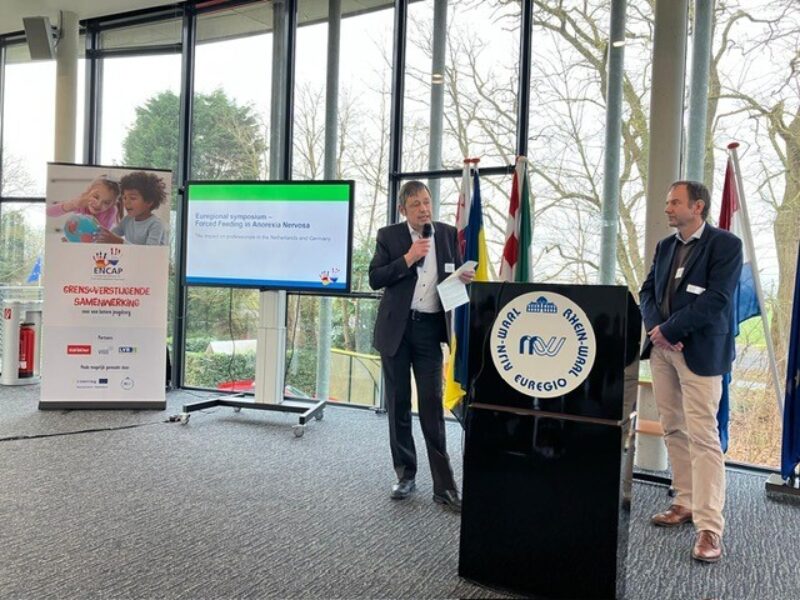
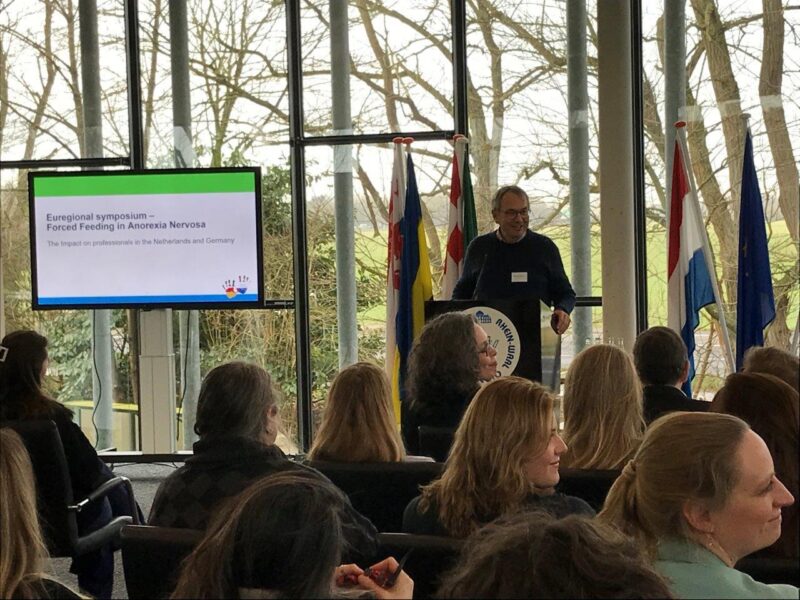
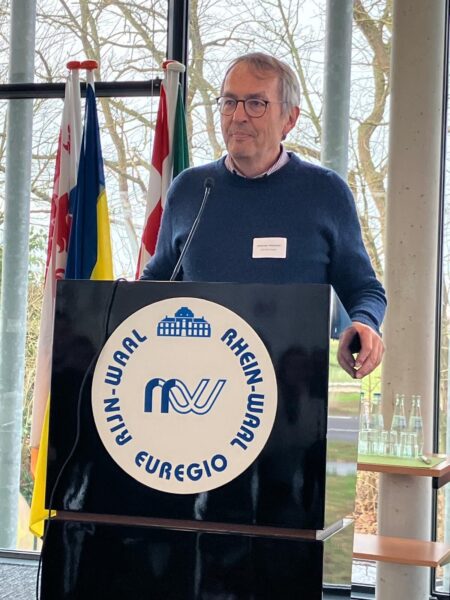
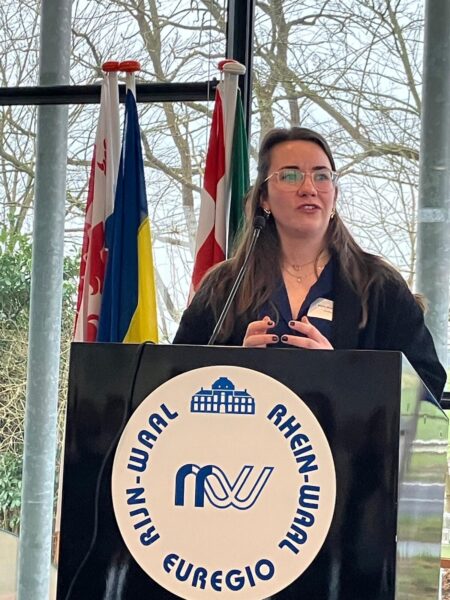
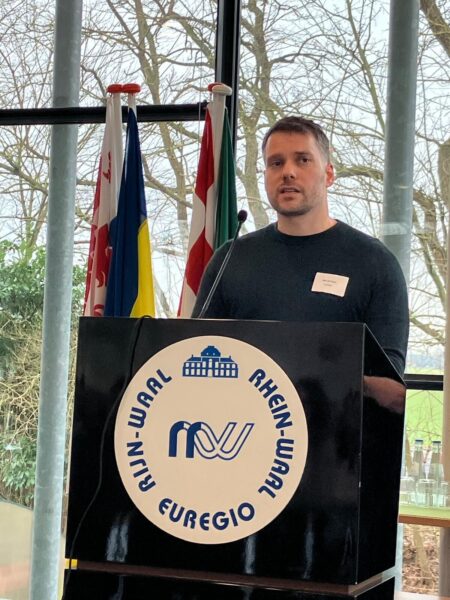
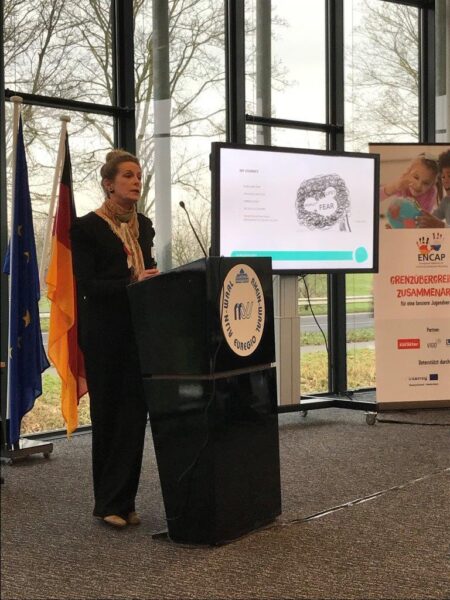
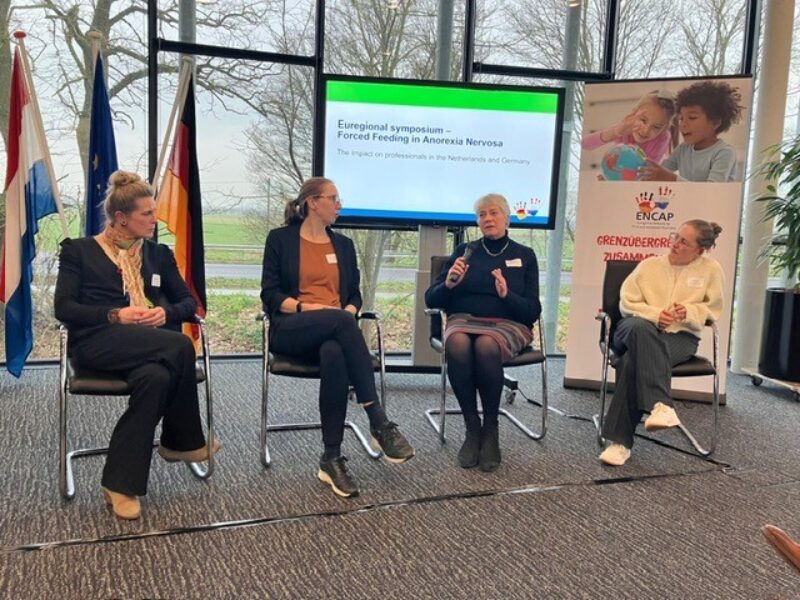
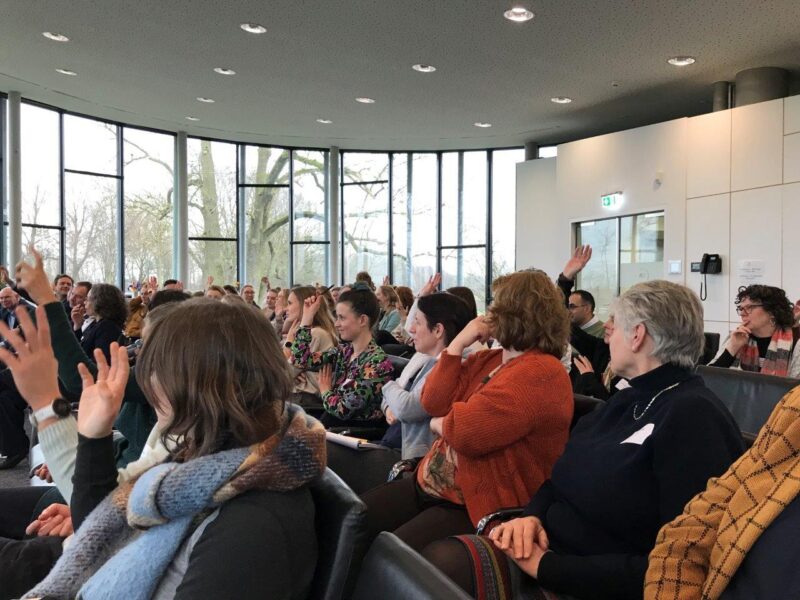
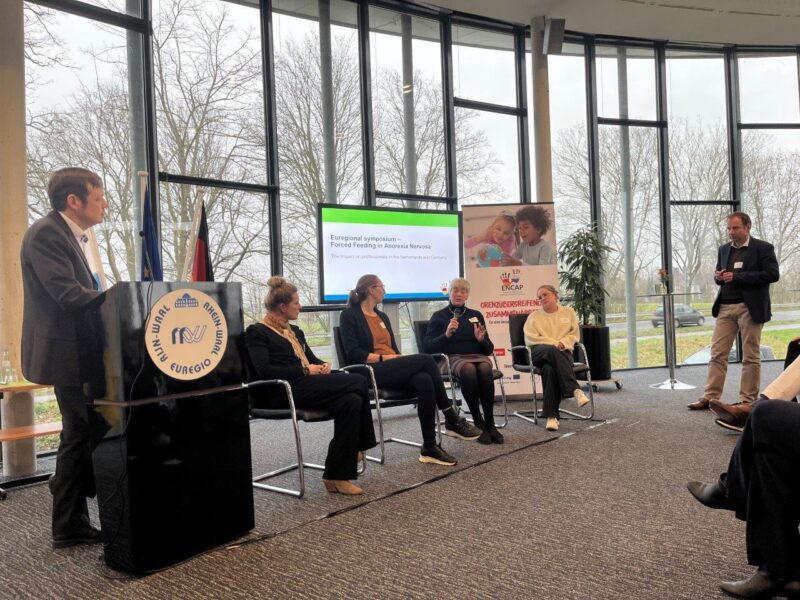
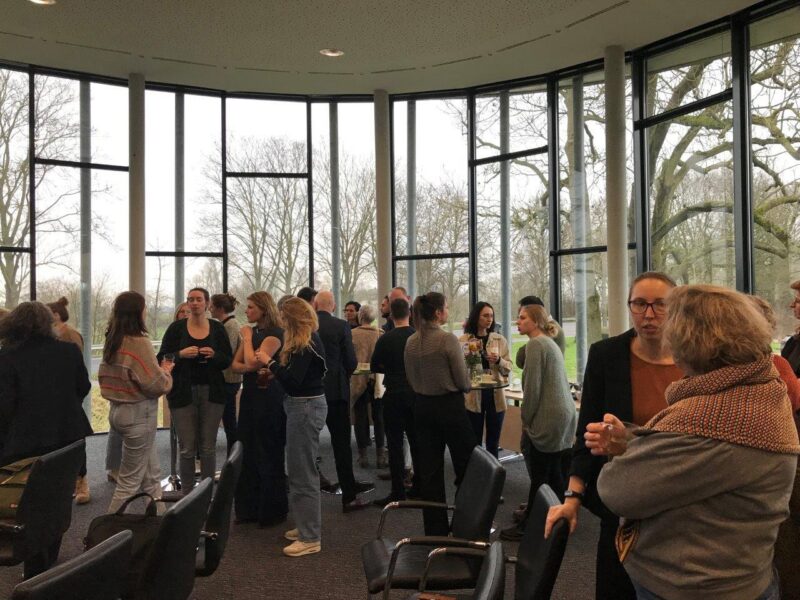
On Wednesday 22 January 2025, the ENCAP (Euregional Network for Child and Adolescent Psychiatry) symposium on forced feeding in anorexia and its impact on professionals in Germany and the Netherlands took place. Many mental health experts from both countries came to Kleve, Germany, to discuss challenges and alternative solutions around this patient care.
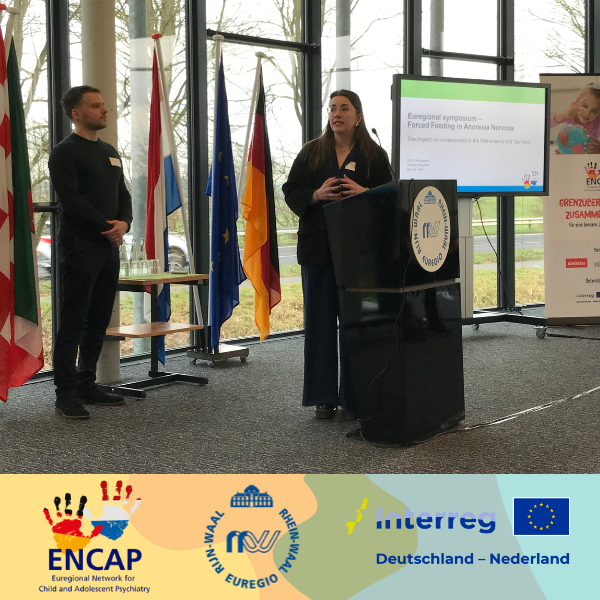
Results qualitive research
The treatment of anorexia is an emotional challenge for patients, their environment and their therapists. The condition is complex and can have life-threatening consequences. Treatment teams regularly struggle with ethical and emotional dilemmas and a sense of powerlessness. Katrin Bringmann and Bas de Veen, both working at Karakter, presented the main results of a qualitative research into the impact of force-feeding on healthcare professionals:
Despite different clinical contexts, the experiences of professionals in the Netherlands and Germany are comparable
The German and Dutch treatment protocols are comparable. Both countries have a strong medical focus and family based therapy is the first intervention. But in practice, we see a great variance. A big difference between Germany and the Netherlands is how the care system is organized. In the Netherlands, care is more focussed on outpatient care aiming at the child as well as their surroundings including parents, schools etc in the treatment. In Germany, the system is organized around the clinics and patients are more often being treated in the clinics. There are less options to involve parents or the surrounding system in the treatment.
Force-feeding has a huge emotional impact on professionals (and everyone involved)
- While treating patients with severe anorexia nervosa, professionals see themselves confronted with significant ethical, medical, and emotional questions and dilemma’s.
- From strong emotions to feeling numb
- People change their job because of the impact
- Fighting outside opinions: defending a treatment they don’t want to do
- Division between professional and teams (care team vs therapeutical team), parents, patients
- Feels like there is no alternative
More awareness, knowledge and funding are needed to support clinicians – and hence patients
- Open communication with colleagues, parents, patients (build trust and confidence)
- Supervision/intervision: individual and team level (emotional processing, new perspectives, feel supported)
- Agency: The option to not do a procedure because it is too much to handle. While in most cases it was possible to decline having to perform FTF, in other cases it was seen as “part of the job”. By giving professionals agency they are not forced into performing procedures they are not comfortable with.
- More staff
- Follow up contact with patients: With regards to patient contact, follow-up contact with patients were mentioned as supportive to professionals. It helped them reflect on the treatment process and to just see how their patients are doing after treatment. While this can be a difficult and confronting experience by professionals as well as patients, it can significantly help in the emotional processing and healing of both.
- Focus groups were intervention in itself, Sharing experiences, perspectives, and clinical approaches with colleagues from another country can help gain new insights.
- Prevention/ketenzorg: Professionals want more collaboration with other institutions involved in caring and educating children. Prevention through educating GPs, paediatricians and independent psychologists in the region can help prevent children to develop unnecessarily severe conditions of their disorder. A closer connection with schools could also help with the reintegration of children with AN and providing more effective and value care.
“I mean, we don’t want to do it […] but I wouldn’t know what the alternative would be.”
Research participant
Panel discussion and exchange
The panel discussion that followed zoomed in on the use and consequences of force-feeding in the treatment of anorexia nervosa. It is clear that everyone wants other treatment options for these patients. Research into alternatives is therefore urgently needed. In addition, more time, attention and support is needed for processing by care providers and teams.
The research project was made possible by the Interreg programme Germany-Netherlands with its programme partners and co-financed by the European Union (EU).
The symposium once again demonstrated the importance of cross-border dialogue between science and practice for the future of healthcare.
Download presentations:
Clinical and experiential insights into the treatment of anorexia nervosa and forced feeding
Prof. Dr. Johannes Hebebrand – University of Duisburg-Essen
Results of Dutch-German research - Treating anorexia nervosa: the impact of forced feeding on professionals
Katrin Bringmann, Bas de Veen – Karakter
Experience story
Helen van der Voorn – JijZijn
Click on a photo to enlarge: